
Tower of Hercules
Watch the light
Keeper test: how many flashes are in one group?
Watch the light, count the flashes, then answer to earn a keeper star.
The signal runs in real time and is simplified for the screen.
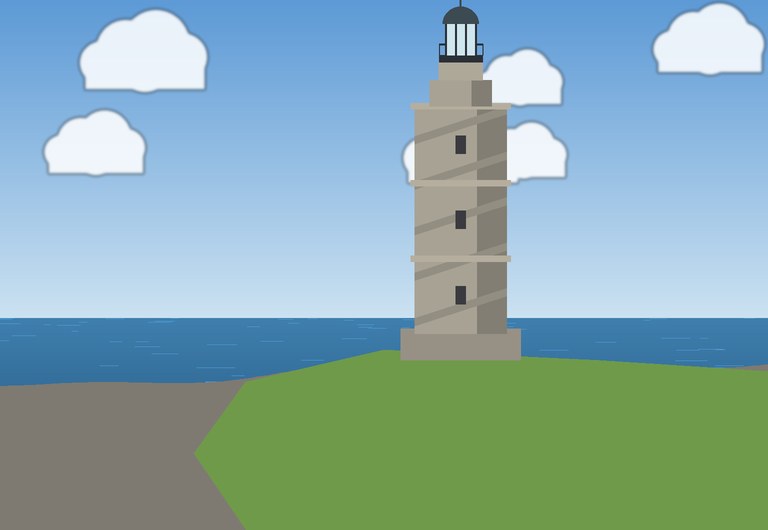
On a windy headland at the edge of A Coruña, in Galicia, stands a square stone tower that has been warning sailors for almost two thousand years. The Tower of Hercules is the oldest known Roman lighthouse still standing, and the only one that still does the job it was built for.
A Roman beacon
The tower was built in the 1st century AD, when this coast was the far western edge of the Roman world. An inscription at its base names the architect, Gaius Sevius Lupus, from Aeminium, today’s Coimbra in Portugal, and dedicates the work to Mars. For centuries a fire on top marked the entrance to the bay for ships sailing along a coast famous for its storms and shipwrecks.
A new coat in the 18th century
By the 1700s the Roman core was worn and bare. Between 1788 and 1791, under King Charles III, the naval engineer Eustaquio Giannini wrapped it in a new neoclassical stone shell and added a fourth storey. The restoration was so careful that the Roman walls survive inside. Today the tower is about 55 metres tall, and its light shines about 106 metres above the sea.
Legends of giants and kings
Local legend says the hero Hercules defeated the giant Geryon here, buried his head and ordered a city to be built on top. The story is shown on the coat of arms of A Coruña. An old Irish tale tells of King Breogán, who built a tower so tall that his sons saw a green land far away and sailed off to Ireland.
Visiting tips
- The tower stands in a large seaside park with walking paths and sculptures.
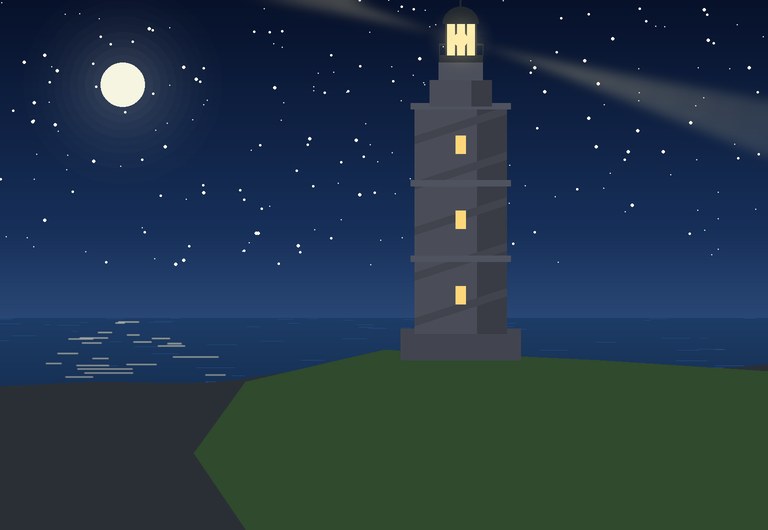
- Come back after dark to see the light at work: it flashes four times every 20 seconds.
- The headland is very exposed, so bring a jacket even in summer.
Key facts
| Location | A Coruña, Galicia, Spain |
| Built | 1st century AD |
| Restored | 1788–1791 |
| Tower height | About 55 m |
| Light height | About 106 m above the sea |
| Signal | 4 white flashes every 20 s |
| Range | 23 nautical miles |
| Status | UNESCO World Heritage Site (2009) |