
Nugget Point Lighthouse
Watch the light
Keeper test: how many flashes are in one group?
Watch the light, count the flashes, then answer to earn a keeper star.
The signal runs in real time and is simplified for the screen.
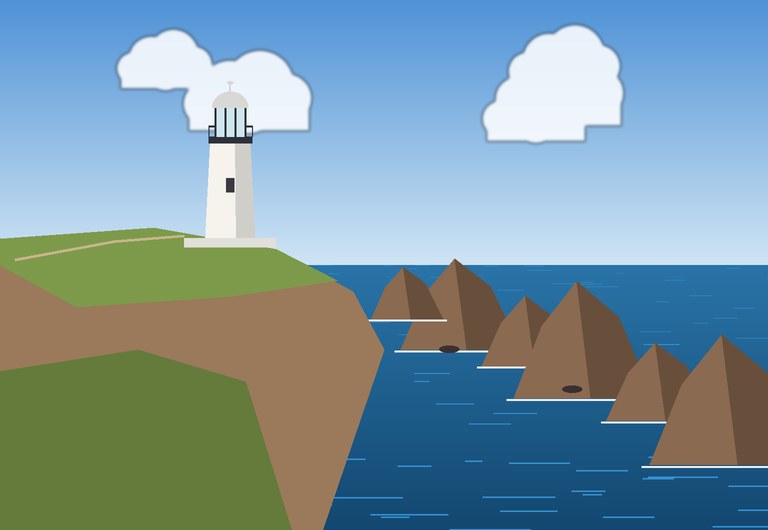
On the Catlins coast in the south of New Zealand’s South Island, a narrow ridge runs out into the Pacific. At its end stands a small white lighthouse, and below it a string of rocky islets rises from the sea. They are said to look like gold nuggets scattered in the waves, and the name stayed: Nugget Point.
A small tower in a high place
The lighthouse was built in 1869 and 1870 from stone quarried nearby, and it was first lit on 4 July 1870. The tower is only about 9 metres tall, but because it stands on a high ridge, its light shines about 76 metres above the sea. Its lamp was first meant for another lighthouse, at Cape Saunders, but was used here when that project was delayed.
From oil to sunshine
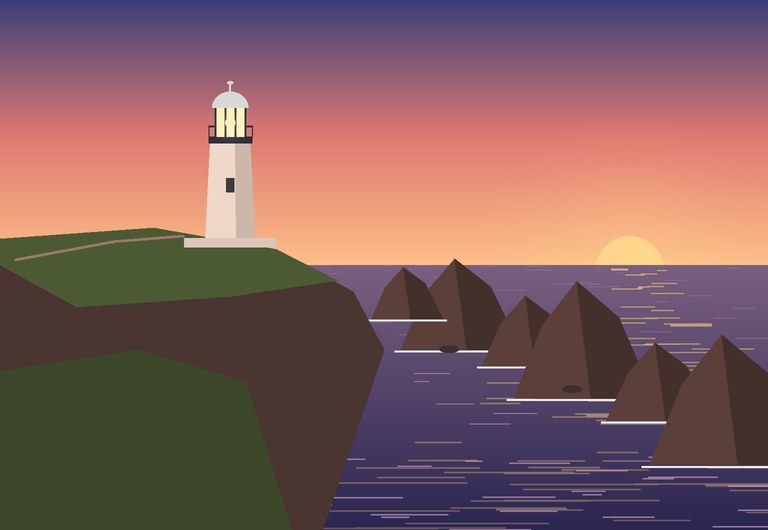
The first oil lamp was replaced with an electric lamp in 1949, powered at first by a diesel generator. The lighthouse was automated in 1989, an LED light was fitted in 2006, and since 2020 it has run on solar power. Today it gives two long flashes every 12 seconds.
Neighbours with flippers
The rocks and bays around the point are home to wildlife. Fur seals often rest on the rocks below, and sea birds nest on the cliffs. Nearby Roaring Bay is known for rare yellow-eyed penguins, which can sometimes be seen coming ashore in the evening from a viewing hide.
Visiting tips
- A short walking track leads along the ridge to a viewing platform beside the lighthouse.
- Sunrise is the classic time to visit, when the light falls on the Nuggets.
- Keep your distance from seals and penguins, and use the hide at Roaring Bay.
Key facts
| Location | The Catlins, South Otago, New Zealand |
| First lit | 4 July 1870 |
| Tower height | About 9 m |
| Light height | About 76 m above the sea |
| Signal | 2 long flashes every 12 s |
| Range | 10 nautical miles |
| Automated | 1989 |
| Power | Solar since 2020 |